

Summary
-
Start With the Basics: Shampoo and conditioner suited to your hair and scalp are the foundation of a practical routine.
-
Choose Based on Your Hair: Fine, thick, curly, straight, dry, and color-treated hair won't necessarily benefit from the exact same products or techniques.
-
Protect During Styling: Heat protection, gentle detangling, and thoughtful drying habits can be just as important as the products you use in the shower.
-
Don't Forget Your Accessories: Brushes, towels, elastics, and hair clips interact with your hair regularly, so they deserve consideration too.
-
More Isn't Always Better: A useful hair care routine is about covering your actual needs rather than collecting as many products as possible.
Hair Care Essentials: What Do You Actually Need for Healthy-Looking Hair?
What Hair Care Essentials Do You Actually Need?
The basic hair care essentials for most routines include shampoo, conditioner, a detangling tool, appropriate styling or leave-in products, heat protectant if you use hot tools, and hair accessories that work comfortably with your hair. Beyond those basics, what you need depends on your hair type, scalp, styling habits, and individual concerns.
It's easy to assume a better hair routine requires more products. There's always another oil, mask, serum, treatment, tool, or trending ingredient promising to earn a permanent spot on your bathroom shelf.
But a good routine doesn't need to be complicated.
Start with what your hair actually needs, build a reliable foundation, and add products only when they serve a clear purpose.
Start With a Shampoo That Makes Sense for Your Hair and Scalp
Shampoo is one of the most basic hair care essentials, but that doesn't mean every shampoo works equally well for everyone.
Think about what you're actually trying to accomplish when washing your hair.
Someone dealing with an oily scalp may have different priorities from someone whose hair tends to feel dry. Color-treated hair can have different needs from untreated hair. How frequently you exercise, use styling products, or wash your hair can influence your routine too.
Pay attention to how your scalp and hair feel between washes rather than choosing something solely because it's trending.
You also don't necessarily need to coat every inch of your hair with the same amount of shampoo. Shampoo is primarily used to cleanse the scalp and roots, while the lengths and ends may require less direct attention depending on your hair.
Conditioner Is More Than an Optional Extra
If shampoo handles cleansing, conditioner helps make the hair easier to manage afterward.
Conditioning can help with softness, smoothness, and detangling, which can make brushing and styling easier.
Again, application can depend on your hair.
Someone with fine hair who gets weighed down easily may prefer focusing conditioner primarily through the lengths and ends. Someone with thicker, drier, or curlier hair may find their hair benefits from richer conditioning or additional moisture.
Instead of thinking about conditioner as something you automatically apply because it's the second bottle in the shower, think about what you're asking it to do for your hair.
Use a Detangling Tool That Works With Your Hair
Your brush or comb is something you may use almost every day, so it deserves just as much thought as the products in your shower.
The right tool will depend partly on your hair type, texture, and whether you're detangling wet or dry hair.
Technique matters too.
When you're dealing with tangles, pulling harder isn't necessarily going to get you through them faster. Work gradually, starting toward the ends and moving upward as knots release.
If you have particularly dense hair, working in sections can make detangling much more manageable.
Gentle doesn't have to mean slow. Once you find a technique and tool that work with your hair, the whole process can become easier.
Add a Leave-In Product When Your Hair Actually Needs One
A leave-in conditioner, serum, cream, or oil can be a useful addition, but you don't automatically need every category.
Start with the problem you're trying to solve.
Does your hair need additional moisture? Are you trying to make detangling easier? Do your ends tend to feel dry? Are you looking for more definition or smoother styling?
Choose products based on those needs rather than stacking several products simply because you've seen them used together online.
This is especially useful if your hair gets weighed down easily. Start with a small amount and add more only if you need it.
If your hair is thick or dense, sectioning can help distribute the product more evenly instead of applying a large amount to the outside layers.
Heat Protectant Belongs in Your Routine If You Regularly Use Heat
If blow dryers, curling irons, flat irons, or other hot tools are part of your routine, heat protection deserves consideration.
Follow the instructions for the specific heat-protectant product you're using, including how much to apply and whether it should be used on damp or dry hair.
Your styling habits matter too.
Try not to use a hotter setting simply because it's available. Avoid repeatedly passing a hot tool over the same section when you don't need to, and give your hair breaks from heat when your schedule and preferred style allow.
Heat styling doesn't have to disappear from your routine. It just deserves the same thoughtfulness as everything else you're doing to your hair.
Your Drying Routine Matters Too
Hair care doesn't stop when you turn off the shower.
Think about what happens immediately afterward.
Aggressively rubbing wet hair back and forth with a towel isn't your only drying option. You can gently squeeze or blot away excess water instead.
Some people also prefer microfiber hair towels or soft cotton T-shirts for wrapping and drying their hair.
If you blow-dry, working in sections can be particularly useful for thick or dense hair. It helps you reach the layers underneath rather than repeatedly heating the outer sections while waiting for everything else to dry.
If you air-dry, give your hair enough time rather than immediately forcing very wet hair into a tight hairstyle because you're running late.
Hair Masks and Treatments Are Extras, Not Automatically Essentials
This is where hair care routines can become overwhelming.
Do you need a mask? Scalp treatment? Hair oil? Serum? Bonding product? Deep conditioner?
Maybe.
But not necessarily all of them.
Treatments are best chosen for a reason. If your existing shampoo-and-conditioner routine isn't addressing something you care about, an additional product may be useful. If your current routine already gives you the results you want, you don't need to add another step just because everyone else seems to have one.
Your hair care essentials can also change.
A routine that works during a humid summer may feel different during a dry season. Coloring your hair, changing how frequently you use heat, growing it longer, or changing your hairstyle can all affect what you find useful.
Your routine doesn't need to remain identical forever.
Don't Forget About the Accessories You Put in Your Hair Every Day
When people think about hair care essentials, they usually think about bottles.
But what about everything else that touches your hair?
Your brush, comb, towel, elastics, scrunchies, clips, and other accessories can be part of your routine just as regularly as shampoo and conditioner.
If you wear your hair up frequently, pay attention to how your accessories actually feel.
Does your ponytail need to be extremely tight to stay up? Does your claw clip feel heavy after several hours? Does it press uncomfortably against your head? Are you constantly repositioning your hairstyle because your clip isn't the right size for your hair?
Those are useful things to notice.
A hair accessory doesn't need to promise miraculous benefits to earn a place among your essentials. It simply needs to work well for your hair and the way you actually wear it.
Choose Hair Accessories for Your Actual Hair Type
Just like shampoo and conditioner, hair accessories aren't necessarily one-size-fits-all.
A person with fine, shorter hair may need something completely different from someone with long, thick, curly, or high-volume hair.
Claw clips are a good example.
If a clip is much too large for the amount of hair you're securing, it may not hold the way you want. If it's too small, you may find yourself squeezing your hair into it, twisting more tightly, or leaving sections outside because everything simply doesn't fit.
Instead, match the accessory to the amount of hair you're styling.
For a half-up hairstyle, that might mean using a smaller clip than you'd choose for a full twist. For very thick or long hair, it might mean moving up to a larger size rather than trying to make a standard clip work.
Your hair shouldn't have to adapt to an accessory that was never the right fit in the first place.
Don't Overlook the Simplest Hair Care Essential: Consistency
A shelf full of excellent products won't do much if your routine is so complicated that you rarely follow it.
That's why simplicity can be useful.
Figure out the basics that work for you and make them easy to repeat. Wash according to the needs of your scalp and hair. Condition appropriately. Detangle gently. Protect your hair when using heat. Use additional products when they serve a purpose. Choose styling tools and accessories thoughtfully.
You can always adjust from there.
Healthy-looking hair isn't necessarily the result of having the longest routine. Often, it's the result of consistently following a routine that makes sense for your hair.
Build Your Hair Care Essentials Around Your Hair, Not a Trend
There isn't one universal collection of hair care essentials that everyone needs to own.
Your essentials should reflect your hair type, your scalp, your preferred hairstyles, and what you actually do to your hair each day.
For some people, that may be shampoo, conditioner, a brush, and little else. Someone who frequently heat styles may add heat protection. Someone with specific conditioning or styling needs may use additional treatments. And someone who wears their hair up almost every day may consider a comfortable, appropriately sized hair clip just as important as the products in their shower.
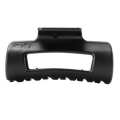
If a claw clip is one of your everyday essentials, Mello Clips offer a comfort-first option with flexible CloudFlex™ construction and Mini, Classic, and Jumbo sizes for different amounts of hair.
But whatever products and tools you choose, keep the bigger principle in mind: your routine doesn't need more for the sake of having more. It needs the essentials that genuinely work for your hair.