

Summary
-
Kids' Hair Needs Different Considerations: Finer strands, more sensitive scalps, and constant movement mean kids' hair accessories can't just be smaller versions of adult ones.
-
Comfort Isn't Optional With Kids: A child won't tolerate an accessory that pinches or pulls, and they'll usually let you know within minutes.
-
Low-Tension Options Reduce Unnecessary Pulling: Kids' hair is often finer and more prone to breakage, so gentler hold matters more than a tight grip.
-
Sizing Should Match Their Actual Hair: Most kids have shorter or lower-volume hair, so a properly sized accessory works better than an oversized one.
-
Practicality Counts for Busy Days: Something quick to put in, comfortable through a full school day, and easy for kids to manage themselves goes a long way.
What to Look for in Kids' Hair Accessories
What Should You Look for in Kids' Hair Accessories?
The best kids' hair accessories are comfortable enough to wear all day, gentle on finer or more sensitive hair, and sized appropriately for how much hair a child actually has. Kids' hair accessories shouldn't just be smaller versions of what adults wear. Kids' hair behaves differently, and their tolerance for discomfort is a lot lower.
If you've ever put a hair clip in your child's hair only to find it on the floor twenty minutes later, or heard complaints about a ponytail being "too tight," you already know that hair accessories designed with adults in mind don't always translate well to kids.
Why Kids' Hair Needs Different Considerations Than Adult Hair
Kids' hair is often finer, thinner, and more delicate than adult hair, especially in younger children. It's also usually shorter, at least until the later elementary years, which changes how much hair an accessory actually needs to hold.
On top of that, kids move more. They run, play, hang upside down on the playground, and rarely sit still long enough for a hairstyle to stay perfectly in place. An accessory that works well for a calm adult day at a desk doesn't necessarily hold up the same way through recess, gym class, and an afternoon at the park.
Comfort Matters Even More With Kids
Adults can often push through a hair accessory that's a little too tight for a few hours. Kids generally won't, and they usually won't stay quiet about it either.
A clip or tie that pulls, pinches, or presses too hard against the scalp tends to get pulled out, complained about, or avoided altogether after the first uncomfortable experience. That's worth keeping in mind before school pictures, long car rides, or a full day at daycare where nobody's around to readjust it. Comfort isn't a nice bonus with kids' hair accessories. It's usually the difference between something that actually gets worn and something that ends up in a drawer.
Why Low-Tension Options Can Work Well for Finer Hair
Because kids' hair is often finer and still developing, it can be more prone to breakage from repeated tight styling. This doesn't mean every hairstyle needs to be loose, but it's worth paying attention to how much tension an accessory puts on the hair itself.
A flexible, low-tension design can help reduce some of that unnecessary pulling, since hold comes from the overall construction rather than sheer tightness. For everyday styles like ponytails, half-ups, or securing hair out of the face during a school day, gentler tension is usually enough to get the job done without adding unnecessary strain to hair that's still relatively delicate.
Sizing Should Match Their Actual Hair, Not Guesswork
One of the most common mistakes with kids' hair accessories is reaching for whatever's on hand rather than something actually sized for a child's hair. Most kids have lower-volume, shorter hair than adults, which means an oversized clip or tie often won't close properly or hold the way it's supposed to.
A smaller, properly sized option tends to perform better in this case. It's the same logic that applies to adult hair: too much capacity for too little hair usually means slipping, while too little capacity means forcing hair in that doesn't fit. Matching the size to your child's actual hair, rather than assuming bigger is safer, makes a noticeable difference in how well an accessory holds through a full day.
Practicality Matters on Busy Mornings
Between getting dressed, finding shoes, and getting out the door on time, most mornings don't leave a lot of room for complicated hairstyling. Kids' hair accessories that are quick to use tend to get reached for more often than ones that require more time or coordination.
This also matters for kids who are starting to do more of their own hair. An accessory that's simple enough for a child to use with some independence, without sharp edges or complicated mechanisms, can make mornings a little easier for everyone involved.
Where Mello Fits Into Kids' Hair Routines
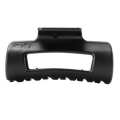
Mello wasn't built specifically for kids, but the same ideas that make CloudFlex™ clips comfortable for adults apply just as well to finer or shorter hair. The flexible construction is designed to close gently rather than clamp down hard, and the Mini size in particular is sized for lower-volume hair, which often makes it a practical fit for a child's typical ponytail or half-up style.
Because the clip doesn't rely on excessive tightness to hold, it can be a reasonable option for parents looking for something gentler than a traditional rigid clip, without needing to size up just to make it fit a child's smaller amount of hair.
Choosing an Accessory That Actually Gets Worn
The best kids' hair accessory isn't the cutest one in the drawer if it never makes it through a full day comfortably. Comfort, appropriate sizing, and gentler tension all affect whether an accessory actually stays in, and whether your child is willing to wear it again tomorrow without a fight.
If you're looking for a flexible option to try, Mello's Clips come in a Mini size that's worth considering for finer or shorter hair, so mornings involve a little less negotiating and a little more just getting out the door.