

A painful scalp rarely comes out of nowhere. More often, it’s a quiet signal — your body’s way of telling you that something in your everyday hair routine isn’t working. Maybe your scalp feels tender by the end of the day. Maybe taking your hair down brings immediate relief. Or maybe certain styles just don’t feel wearable anymore.
Rather than treating scalp pain as something to ignore or push through, it’s worth listening. Discomfort is feedback. And in many cases, it’s directly connected to the way hair is styled, secured, and supported throughout the day.
Why Does Scalp Pain Often Show Up Gradually?
Scalp discomfort tends to build slowly because tension builds slowly. Most hair routines involve repeated habits — the same styles, the same placement, the same accessories — day after day.
Over time, this can lead to:
-
Persistent tenderness at the crown or nape
-
Sensitivity where hair is frequently pulled back
-
Discomfort when brushing or touching the roots
-
Relief only when hair is taken down
-
A sense that your scalp feels “overworked”
Because the discomfort isn’t sudden, it’s easy to normalize it. But a comfortable routine shouldn’t create pain as a byproduct.
What Is Your Scalp Responding To?
Your scalp is sensitive tissue. It responds to pressure, weight, friction, and tension — especially when those forces are applied for long periods.
When styling causes pain, your scalp may be reacting to:
-
Constant pulling in one direction
-
Uneven weight distribution
-
Pressure points from rigid accessories
-
Lack of movement or flexibility
-
Friction from rough edges or seams
Pain doesn’t mean something is “wrong” with your scalp. It often means your tools and habits are asking too much of it.
Which Types of Hair Clips Are More Likely to Cause a Painful Scalp?
Not all hair clips are created equal. Some designs unintentionally create the very tension and pressure that leads to scalp discomfort.
1. Rigid Plastic Clips
Clips made from stiff, inflexible plastic rely on force to hold hair in place. Without any give, they press into the scalp instead of adapting to the natural curve of the head. Over time, this constant pressure can lead to tenderness.
2. Clips With Overly Tight Springs
A spring that clamps aggressively may feel secure at first, but that tight grip concentrates tension in one area — especially at the crown or behind the ears.
3. Heavy Clips
Weight matters more than most people realize. A heavy clip adds downward pull, increasing strain at the root — particularly for long or thick hair.
4. Flat or Angular Clip Shapes
Clips that don’t follow the natural contour of your head create pressure points. Instead of resting comfortably, they dig in as you move.
5. Rough or Sharp Edges
Poorly finished edges can snag hair and irritate the scalp, especially when clips are adjusted or removed throughout the day.
When a clip causes discomfort, it’s usually not about the style — it’s about how the clip interacts with your scalp.
Why Do Certain Hairstyles Make Scalp Pain Worse?
Even with the right clip, some styling habits can amplify discomfort.
Scalp pain often increases when:
-
Hair is pulled tightly back for long periods
-
Styles rely on compression rather than support
-
Hair is always secured at the same height or angle
-
There’s no variation in placement throughout the week
-
Hair is forced into place instead of allowed to rest naturally
A routine built around control rather than comfort puts constant demand on the scalp.
What Does a Scalp-Friendly Hair Routine Look Like?
A comfortable routine doesn’t eliminate structure — it softens it.
Scalp-friendly styling habits include:
-
Low-tension styles that support hair rather than pulling it
-
Flexible holds that allow small movements throughout the day
-
Balanced weight distribution instead of tight focal points
-
Varied placement to avoid repeated stress in one area
-
Tools that adapt instead of forcing hair into position
Comfort doesn’t come from avoiding styling. It comes from choosing better tools and gentler methods.
How Can a Softer Clip Change the Way Your Scalp Feels?
A softer, comfort-first clip changes the relationship between your hair and your scalp.
Instead of gripping through force, it:
-
Adapts to your head’s shape
-
Moves with your hair as you move
-
Spreads tension evenly
-
Reduces pressure points
-
Feels lighter over time
This shift — from rigid control to gentle support — is often the difference between a routine that hurts and one that feels sustainable.
How Does Mello Reflect a More Thoughtful Hair Routine?
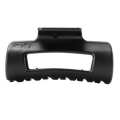
Mello was created with the belief that everyday accessories shouldn’t create discomfort as a trade-off for style. Rather than relying on stiff materials or aggressive tension, Mello focuses on comfort-first design.
That approach shows up in:
-
Soft, flexible materials that bend gently with movement
-
Balanced tension that holds without squeezing
-
Lightweight construction that minimizes downward pull
-
Curved shapes that rest naturally against the head
-
Smooth edges that reduce friction and snagging
Mello doesn’t ask your scalp to tolerate pressure. It’s designed to reduce the forces that commonly cause discomfort in the first place.
What Is Your Painful Scalp Asking You to Change?
Often, it’s not asking for a full routine overhaul. It’s asking for refinement.
Your scalp may be asking you to:
-
Choose flexibility over rigidity
-
Prioritize comfort alongside appearance
-
Rotate styles and placement
-
Let hair move naturally
-
Use tools designed for long-term wear
Listening to that feedback can turn styling from something you endure into something that feels supportive.
Ready for a Hair Routine That Feels Better Over Time?
A painful scalp isn’t something to push through. It’s information — a signal that your routine could be gentler, more balanced, and more comfortable.
When your tools are designed with softness and flexibility in mind, styling stops feeling like a strain and starts feeling intuitive again.
If you’re ready to explore a more comfort-first approach to everyday styling, there’s a better place to begin.