


Summary
-
Most Slipping Comes From Size or Placement: A clip that doesn't match your hair or sits in the wrong spot is the usual culprit.
-
Tighter Isn't Better: Over-twisting to make a clip hold adds tension without solving the real problem.
-
Technique Matters as Much as the Clip: How you twist, section, and anchor your hair changes how well it holds.
-
Comfort Shows Up Over Hours: A clip can feel fine in your hand and uncomfortable by the afternoon.
-
Small Fixes Make a Big Difference: Adjusting size, placement, or sectioning is often enough.
6 Hair Claw Clip Mistakes and How to Fix Them
Why Do Hair Claw Clips Slip or Feel Uncomfortable?
Hair claw clips usually slip or feel uncomfortable because of a mismatch: the clip is the wrong size for your hair, it's placed in a spot that works against gravity, or the twist isn't set up to support the weight. It's rarely a sign that claw clips don't work for your hair. Most of the time, one small change fixes it.
You put your hair up and everything feels fine. By the afternoon, the clip has slid down, you've tightened it twice, and you're thinking about giving up on claw clips altogether. Here are six common mistakes behind that, and how to fix each one.
1. Using the Wrong Size Clip
This is the most common mistake. A clip that's too small for your hair may not close, or may close only by compressing your hair, while a clip that's too large leaves room for your hair to shift and slip. Either way, you end up compensating with a tighter twist.
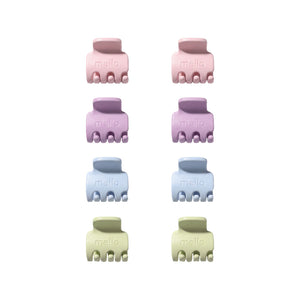
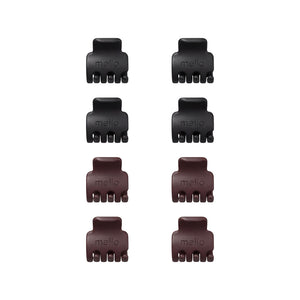
The fix: Match the clip to the amount of hair you're holding. Fine or short hair usually works well with a Mini, medium hair with a Classic, and long, thick, curly, or voluminous hair often needs a Jumbo with more capacity. If your clip barely closes or feels loose, size is the first thing to check.
2. Twisting Your Hair Too Tightly
When a clip isn't holding, the instinct is to twist tighter. That can work for a while, but it adds tension at the scalp and often doesn't solve the underlying problem. A tight twist can also feel uncomfortable by the end of the day.
The fix: Use a gentler twist and let the clip do the holding. If it only works when your hair is twisted very tightly, the clip is probably too small or the placement needs adjusting.
3. Placing the Clip Too High
A clip placed very high on your head has to hold the weight of your hair against gravity, which makes slipping more likely. This is especially true with long or thick hair.
The fix: Try placing the clip a little lower, closer to the middle or lower back of your head, so the hair can rest into the twist and share the load. Small changes in placement often matter more than changing the clip.
4. Only Catching the Loose Twist
A claw clip holds best when the prongs catch both the twisted section and some of the hair against your head. If it only grabs the loose end of the twist, the clip has nothing anchoring it and tends to slide out.
The fix: After twisting, fold the ends up and open the clip so it slides over both the twist and the hair against your scalp, then release. You should feel it catch against your head, not just hang from the twist.
5. Skipping Sectioning on Thick Hair
Trying to clip a large mass of hair all at once can make the twist unstable and the clip work harder than it needs to. The weight shifts, the twist loosens, and the clip slips.
The fix: Divide your hair into two or three sections. Twist the lower section up first, then bring the upper section over it before securing everything together. This distributes the weight more evenly and helps the style hold.
6. Judging Comfort by How It Feels in Your Hand
A clip can feel solid and well-made when you pick it up and still be uncomfortable after a few hours. Rigid materials, sharp prongs, or a bulky handle can create pressure points that you only notice later, especially when you lean back in a car seat or office chair.
The fix: Wear a clip for a few hours before deciding how it feels. Pay attention to whether you keep adjusting it, whether it pokes when you lean back, and whether you notice tenderness where it sits. A flexible clip with a flatter profile can be easier to wear for long stretches.
Does Material Make a Difference?
It can. Hold comes from the overall construction, including the spring, the prongs, the size, and how you wear it, but flexibility can affect comfort. A clip that compresses slightly and returns to shape can help reduce concentrated pressure, while a rigid clip pushes back the same way all day.
If you notice persistent pain or frequent headaches, it's worth mentioning to a doctor, since hair accessories aren't always the only factor.
Mello's Approach to Avoiding These Mistakes
Mello Clips use flexible CloudFlex™ construction with curved, inward-facing prongs designed to close gently around hair, plus a flat handle that sits comfortably against your head. With Mini, Classic, and Jumbo sizes, you can choose a clip that fits your hair so you don't have to over-tighten.
No clip can fix every styling issue, but starting with the right size and a comfortable design makes most of these mistakes easier to avoid.
Small Adjustments, Better Results
Most hair claw clip problems come down to size, placement, or technique. Choose a clip that fits your hair, use a gentler twist, place it where it can support the weight, and give it a few hours to see how it really feels.
If you're ready to try a clip designed for everyday comfort, Mello Clips are a good place to start, especially if you want a few sizes for different hairstyles.


