


Summary
-
Comfort Is Three Things, Not One: How a clip feels comes down to pressure, weight, and shape working together.
-
Pressure Is About Where It Concentrates: A clip that presses hard on a few points feels very different from one that spreads pressure out.
-
Weight Includes Your Hair: The clip itself matters, but so does how well it supports the hair it's holding.
-
Shape Decides How It Sits: Profile, handle, and prong design affect how a clip feels when you lean back or move.
-
Sizing Ties It All Together: A clip that fits your hair doesn't need to be over-tightened to hold.
What Makes Hair Clips Comfortable: Pressure, Weight, and Shape
What Makes a Hair Clip Comfortable?
A comfortable hair clip is one that manages pressure, weight, and shape well enough that you stop noticing it. Pressure is how hard the clip pushes against your scalp and hair, weight is how much the clip and your hair pull on a small area, and shape is how the clip sits against your head and moves with you. When all three work together, a clip can feel fine at hour eight, not just in the first ten minutes.
It's easy to judge a clip by how it feels in your hand, but comfort mostly shows up later, when you've been sitting, driving, working, or leaning back for hours.
Why Does a Clip Feel Fine at First and Uncomfortable Later?
Most discomfort builds over time. A little pressure you don't notice at 9AM can become a dull ache by mid-afternoon, especially if you've been leaning back against a chair, headrest, or couch. That's why a clip that seemed perfectly comfortable when you put your hair up can feel very different by the end of the day.
You put your hair up before work and everything feels fine. By the afternoon, you're adjusting the clip for the third time. Breaking that pattern usually means looking at the three factors behind it.
How Does Pressure Affect Comfort?
Pressure comes from how the clip closes around your hair and where that force ends up. Strong springs, rigid teeth, and a tight twist can concentrate pressure on a few points, which tends to feel more noticeable over time. A clip that closes gently and spreads force across more of your hair is usually easier to forget.
Material plays a role here too. A rigid clip holds one fixed shape and pushes back the same way all day, while a flexible one can compress slightly under pressure and return to shape. That give can help reduce concentrated pressure, though it isn't the only factor.
How Does Weight Affect Comfort?
Weight is partly the clip itself and partly your hair. A heavy clip can pull on your hair, especially if it hangs from a small section. Thick, long, or voluminous hair adds more weight, which means the clip has to support more, and the way it distributes that weight matters.
If a clip keeps sliding down or you feel a pull near the roots, it may be struggling with the weight it's holding. Sectioning your hair before twisting, placing the clip slightly lower, and choosing a clip with enough capacity can all help.
How Does Shape Affect Comfort?
Shape covers a few things: the profile of the clip, the handle, and the prongs. A bulky or rounded clip can poke into your head when you lean back, while a flatter profile sits closer and is easier to rest against. Prongs that are curved and rounded tend to feel gentler than sharp ones, and a clip that closes smoothly around your hair is less likely to snag.
If you spend time in a car, on a plane, or in an office chair, shape is often what you notice first.
Why Does Sizing Matter for Comfort?
Size connects pressure, weight, and shape. A clip that's too small for your hair often has to be forced closed or paired with a tighter twist, which adds pressure. A clip that's too large for the amount of hair can leave room for your hair to shift, which leads to slipping and more tightening to compensate.
The right size lets a clip close around your hair without compression and hold without extra tightness. Fine or short hair usually fits a Mini, medium hair does well in a Classic, and thick, long, or voluminous hair often needs a Jumbo with more capacity.
Does Flexible Mean Less Secure?
Not necessarily. Flexible doesn't mean flimsy. Hold comes from the overall construction: the spring, the prongs, the shape, the size, and how you place the clip. A flexible clip can still hold securely while feeling softer against your head, which is why many people look for that combination.
How Can You Tell If a Hair Clip Is Comfortable?
A few simple checks help. Wear it for a few hours rather than a few minutes. Lean your head back against a chair or car seat. Notice whether you keep adjusting it. Check for tenderness where the prongs sit once you take it out. If you forget the clip is there, it's doing its job.
If you notice persistent pain or frequent headaches, it's worth mentioning to a doctor, since hair accessories aren't always the only factor.
Mello's Approach to Comfort
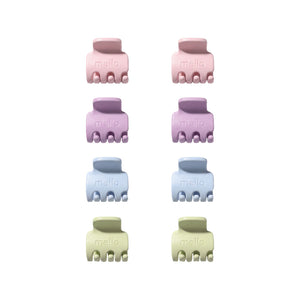
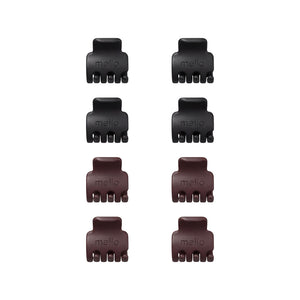
Mello Clips use flexible CloudFlex™ construction designed to compress and bounce back, with curved, inward-facing prongs that close gently around hair, and a flat handle that sits comfortably against your head. With Mini, Classic, and Jumbo sizes, you can choose a clip that fits your hair so you don't have to over-tighten.
Comfort isn't a single feature. It's the result of several details working together, which is the idea behind how the clips are designed.
The Best Clip Is the One You Forget
When you're choosing a hair clip, look past how it feels in your hand. Think about pressure, weight, and shape, and how they'll feel after hours of wear. A clip that manages all three, in a size that fits your hair, is much more likely to stay comfortable all day.
If you want to try one, Mello Clips are a good place to start, especially if you want a few sizes for different hairstyles.


